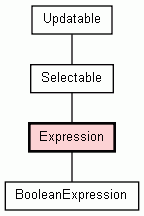
Interface to an expression. Expressions are used as a generalized
concept of a basic data unit. They can contain references to parameters,
basic arithmetic and units.
Expressions are often expected as argument in constructors or are the
type of a member. Whenever possible Python will try to convert the type
given into an Expression. By default string, float, int and complex are
converted into Expression objects when required. Depending on the
context coercion may occur but will always be performed in a safe
manner.
|
|
|
|
|
|
|
|
|
|
|
|
|
|
|
|
|
|
|
|
|
|
|
|
|
|
|
|
|
|
|
|
|
|
|
|
|
|
|
|
|
__pow__(x,
y,
z=...)
pow(x, y[, z]) |
|
|
|
|
|
|
|
|
|
|
|
|
|
__rpow__(y,
x,
z=...)
pow(x, y[, z]) |
|
|
|
|
|
|
|
|
|
|
|
|
|
|
|
variant
|
evaluate()
Returns the current value of the complex expression. |
|
|
|
string
|
formula()
Returns the current formula of the complex expression. |
|
|
|
|
isParametric(...)
No documentation available. |
|
|
|
|
isValid(...)
No documentation available. |
|
|
|
|
setFormula(...)
No documentation available. |
|
|
|
|
setGlobalParameterList(...)
No documentation available. |
|
|
|
|
|
|
|
|
|
|
unitClass(...)
No documentation available. |
|
|
|
Inherited from Selectable:
clone,
isSelected
Inherited from Updatable:
__enter__,
__exit__,
hash,
reasonWhyInvalid
|